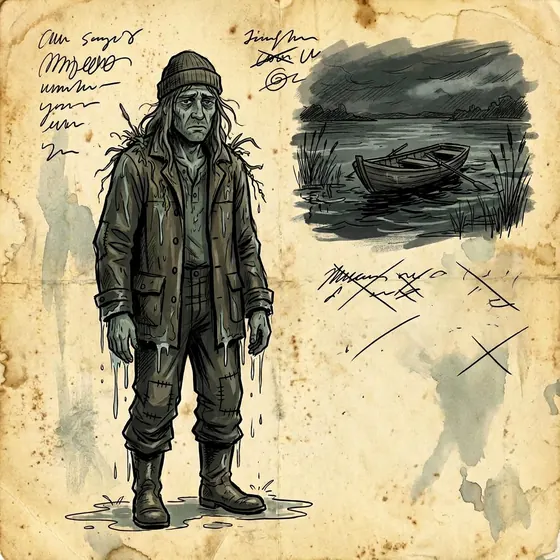
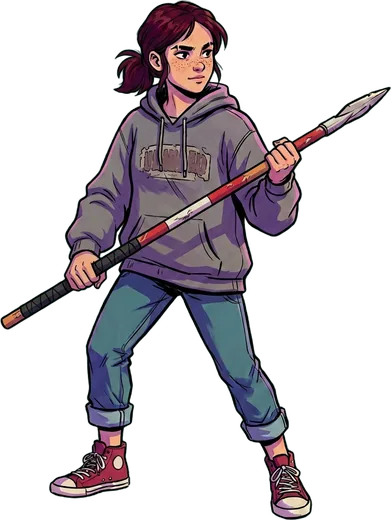
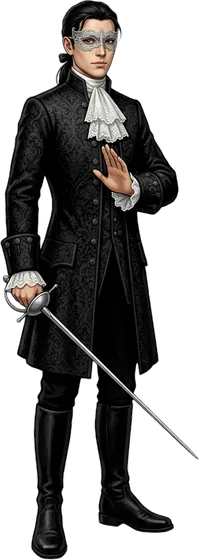
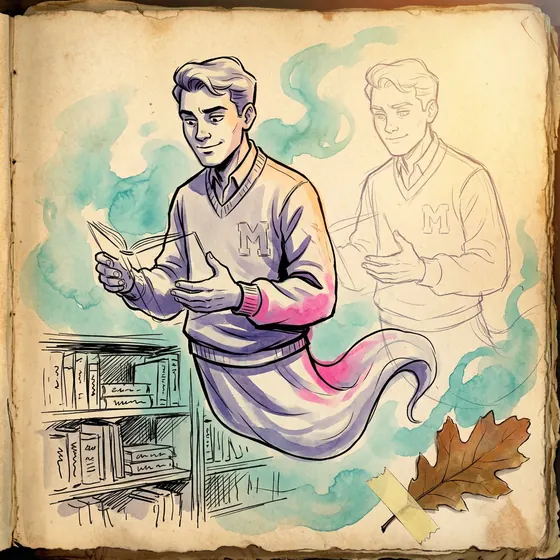
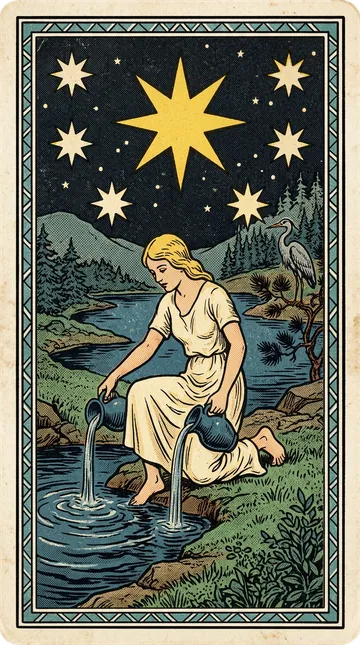
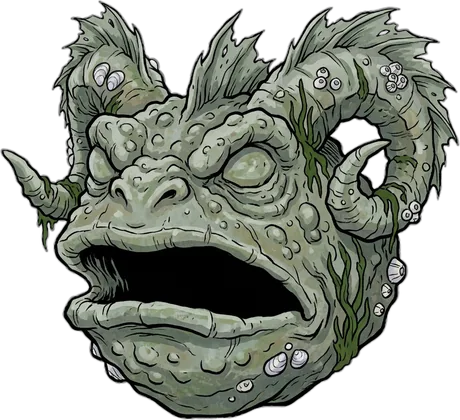
We are capable former somethings.
The machines made us all a ‘former something’. Then they handed every artist a bigger canvas than they had last year. And now, they are waiting.
What we put on this canvas is still our job. Artists: this is not a moment of abandonment. This is a moment to seize. Because now, possibly for the first time ever, we can take ambition seriously.
Every studio we know had the same conversation this year: someone opens a laptop, types a sentence, and a picture comes back. The room goes quiet. Then half the people in it start talking about what they are going to lose, and the other half start talking about how much faster they will go.
Some may see only the scary part: I see it too. It's up to the governments and some courageous associations to help with this; I’ll leave it to the powers that be.
Some were amazingly skilled at what they did, and held on to it hard. Maybe they did not think of themselves as a tool, an instrument of the vision, or they fear, on the contrary, that their value as an instrument is now void.
Both halves are missing the interesting part.
And here I will talk about art, because I can trust artists. Yes, I hope I can trust you all: artists and art lovers, and game lovers, we are all of the same family. We grew up on the same imagination, dreams and games, and shared experiences we found fun. We are bound by passion even before we are bound by talent.
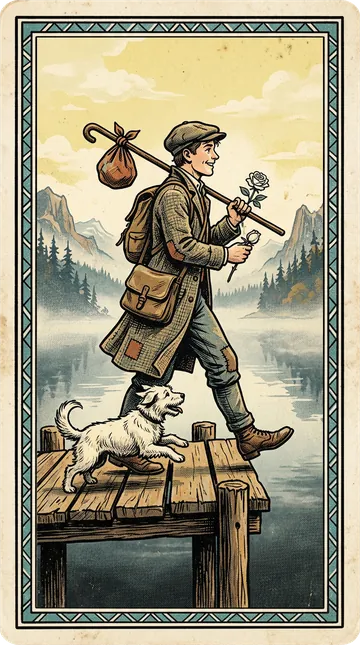
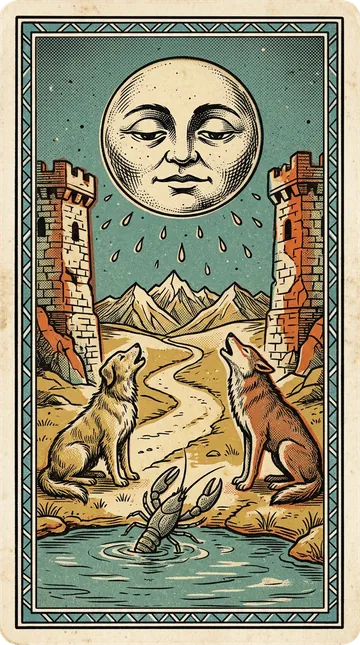
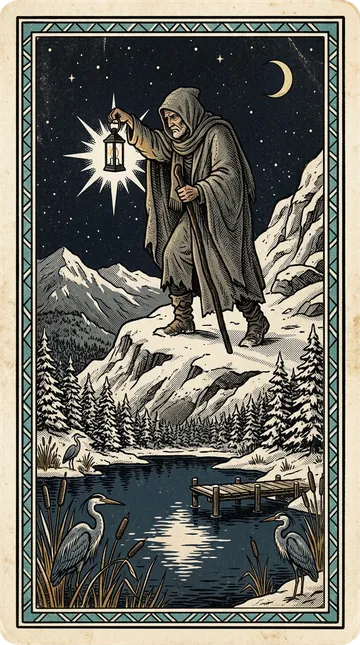
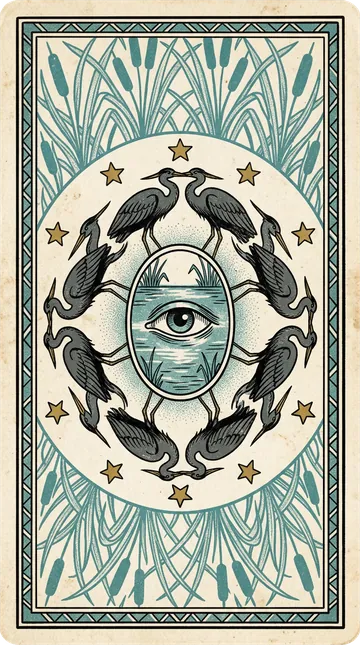
The interesting part is that everyone can now attempt a game with the scope of a mid-sized studio from ten years ago: hundreds of scenes, a bestiary, a tarot deck, or reinvent the roleplaying genre, or mix three genres, or even more. The tools do not shrink the work. They make room for a much larger amount of it, if you are willing to do it.
That last clause matters more than the rest of this page. You can use a bigger canvas to paint something bigger, or you can use it to fill a bigger wall with the same nothing, faster. What do you decide to do?
On this game, as I worked 15 hours a day, day after day, I was digging deeper. And every day literally transformed the game. It expanded, and expanded. Every single part became something I would call: a core, a core of its identity. That is how I knew it was filling, now, and really filling, a bigger canvas.
What the offer actually is
Strip away the marketing and the panic, and here is what is on the table. Drafts are cheap. Variations are cheap. Translation, reference gathering, first passes at code, mood boards, rough voice takes: cheap. The million lines of code I wrote by hand in one of my projects: cheap. My entire experience: cheap.
Sad but true. We have all become 'former somethings', and I know we did not ask for it. I did not.
I wanted to have a competitive edge because of my decades of work. I wanted a reward for all the sacrifices of the past. But this is not exactly what it is about, now.
Yes, we have all become veterans of something that is gone. And the people holding on to the past, the people trying to look away, will be caught by it in weeks, or months. But three things remain.
The first: we are still instruments to the artistic vision. I was, myself; I was when I wrote poems, I was when I wrote novel-sized stories, I was when I made games. I am still the same child, possessed by a muse. If you think you are an artist, but don't think of yourself as an instrument to your artistic vision, then instead of: closing this blog, and going away, please rethink your true role as an artist. You serve the vision you have. With your hands, eyes, muscles and brain. This is what you do. You do it to make people see, and feel, and make this vision exist. Making people see and feel is what you want, even when it is for yourself.
The second: being owned and possessed by that vision is our first strength. We still are instruments. But now, now we can go further. Not because we were former somethings. Our technical knowledge is cheap. But because we are still artists. And we are still hard workers. That gives a lot of potential, now.
And the last: two things stay expensive: our passion, which translates into the amount of work we can still put into it; and our judgment, which translates into how well we want to fill that bigger canvas. Knowing which of forty drafts is the true one.
Your heart is not cheap. Your vision of the game is not cheap. Or should I say, your arch-vision. The tools are stronger than us, so they help make something that is bigger than ourselves too. And "This is the Way". This is what I have to stand for, now. Actually, this is what I already stood for when I was young. Do you think I made art because I wanted to protect artists? No. I made Art because I was an artist, and because it possessed me. So what has changed?
Artists were not artists because of a name, but because they were crafting creations. And now they can craft larger creations. It could be the golden era of creation. Not in the glory of our former trained muscles. No. I am sorry about it. My training cannot carry my next glorious days, and it won't carry yours. This ship has sailed, truly. Our trained muscles are no longer the best way to serve the Vision, except in a few areas, such as writing, and some still in transition. But our imagination, the thing behind it all, still works.
I did not dream of being recognized for my engineering knowledge, my custom database, my self-made software. I did not dream of being recognized for anything. I wanted love. I wanted love for the fun in the game, and I loved characters who felt more alive than real people, and wanted others to have these feelings, too.
And now, now they can do that, more than ever. On the condition that I do the work.
Making something bigger than me, serving the Vision, pouring my blood and my hours into it. Like a painter going back to his canvas every day and making it bigger, then bigger.
No one has the right to say these hours are not mine. No one has the right to say this blood is not mine. No one has a right to say sacrifice and being an instrument to a vision is not art.
With six novel-length volumes of surrounding material so far, and a body of human-written work made beforehand to set the canon, this game carries my blood. As it should.
This is not the end of art: this can be our rebirth. Former somethings but still with a lot to say. A shout of existence, a shout of artistic creation. Make it. Make it heard, seen, and made. Make things bigger than ourselves. We can, now.
The only questions are: How big can you dream? How long can you work in a day? And how strongly can you be possessed by your vision?
It's up to you to set the bar.
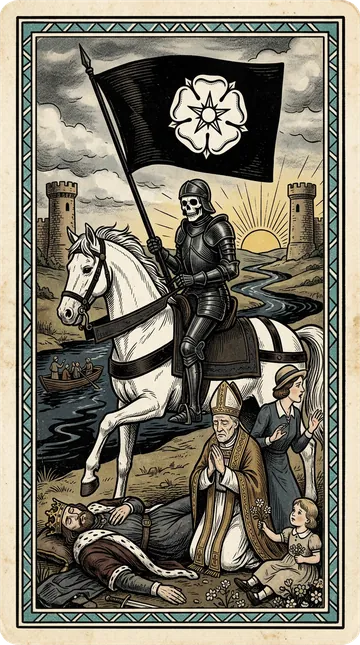
Judgement. Let's take that one for a moment.
Judgement does not scale with compute. It scales with attention, and attention is the one thing an artist cannot outsource without losing the work. So the real question for anyone making things right now is simple. Where do you spend the attention you saved?
Where do you spend the work? What is your work? And do you work enough? Do you extract pure mana, pure ideas and pure art to pour into it?
Are you still an artist? Then, own it.
The tools no longer need your 10 or 40 years of practice. I know this well. The million lines of code: some of them shaped the architecture used in this game, yes. But the tools no longer need me to program these lines again. It's part of the former somethings that we were.
And also, just so you know: I keep model training turned off. I don't put my work into the cloud. I want projects to evolve creatively, and separately, and not to be merged 'too fast' into one big pool of artistic blood. But I can't decide what others will do: I can only decide for myself.
Some people spend the time they saved on churning out more of the same. They ship ten things where they used to ship one, each a little thinner than the last. I understand the temptation. It can be the fastest way to become invisible, or to miss the chance to make one great work.
I made twenty prototypes early on, but then I found out: I only commit to something if the vision is pure, if the vision is grand, if the ambition can own me. Some could still, but I got possessed by a stronger pull. This pull is the vision that helps you be the judge, and that helps you set the bar. You need something you can lose yourself in.
So instead, I pushed it, and pushed it, and pushed it some more. I ended up with something unique along the way, but was it the goal? I would not know, I was just continuing to shape it and to dig it, with no other objective in me, than to dig further.
I was possessed by the vision, and I dug deeper, because I wanted these characters to take shape, because I started to love them.
It was exactly the same with my other project, the one I programmed by hand. The only question is how ambitious you can be: how high your ceiling is.
This sounds Lovecraftian, and it almost is, because the tools made each one of us stronger, not weaker, as if in the past we were mere drones paying our rent, limited only by our bank accounts. But now, now we have magic. The problem with magic is: what do we want to do with it?
Cheap drafts, expensive decisions.
Slop is a choice
We have a word now for the thin stuff. Slop. We say it for the image with seven fingers that nobody looked at twice before posting it, but also for the store page written by a model that does not play. We also say it for the trailer music that sounds like music... the way a waiting room could sound like a home, I guess.
The machine did not make it careless. It is the creator that stopped caring.
something to pin above my desk
Slop is not a property of the tool, it is a temporary property of the person holding it. It is what you get when the person holding the tool stops making decisions.
Every one of us has produced slop by hand, long before any of this existed: the filler level, the placeholder texture that shipped. And almost everything we made could have been better with more time and funds.
When I did not have the money, I made things myself, slowly, or used stock art, and I tried to select good stock artists, the ones who fit the vision. When machine-made art flooded the stock sites (Adobe Stock allowed it first, I think; let's not forget that), I decided that making my own would be better. But when I had money, I paid artists, and then I no longer had the money. So I could not pay myself. So people around me said that making art was the irresponsible thing to do. Go sell houses instead, you'll be rich.
Yes, we lived in a society built on the glory of money and on contempt for artists' lives: not the successful ones you read about in the press, but all the millions of others.
Money, money, money. It has been said three times, no, five. It gets said dozens of times a day in studios and indie teams. Investors, who were not artists, sat at the top of the chain, because money was the pyramid. Not creation. Not imagination. Investors were truly helpers, but was that good, really? Aching muscles serving a pyramid of currency, limited by godlike investors?
Since when was money the god that artists should worship? Currency was only ever a means to barter. Should we judge people by how much they can barter, or by how many houses they bought? That part is gone now. Money no longer rules over our creative ambition. So why are people sad?
Maybe because some projects lack ambition. Well, we can push them. What we can achieve now is something worth working for.
The tools did not invent slop. They only removed 'the friction' that used to slow it down.
The defence against slop is the same as it always was: look at the thing. Decide whether it is good. Throw it away when it is not, whether it was free or paid. I know a large number of human-made works I find bad, and a large number of machine-made ones. Stop judging the source; judge the result.
Now, slop can happen fast, and decisions must be made just as fast. If anything, we expose ourselves to 'decision fatigue'. Because that's a muscle that's going to be used, a lot.
We are not 'blood collectors'. We cannot measure the blood someone put into a work; it is hidden from us. I believe large studios already use AI without telling us, and we still pay for their games. Some outsource to contractors who use it, with no disclaimer. I believe some publishers and translators have used AI drafts for years without saying so. We sometimes notice poorer translations, but maybe that is all, and we enjoy translations arriving 'magically sooner'.
We all use AI search and help refine the training models. We use auto-translated software. We browse auto-translated forums. We feed it every day, and we benefit from it every day, too. The TV show we watch, the movie we saw, the book we read, even the sloppy script of that TV show (sloppy can be human too, unfortunately): they just did not disclose it, because they don't have to.
And the people behind them still work hard. That is why some of it is really good.
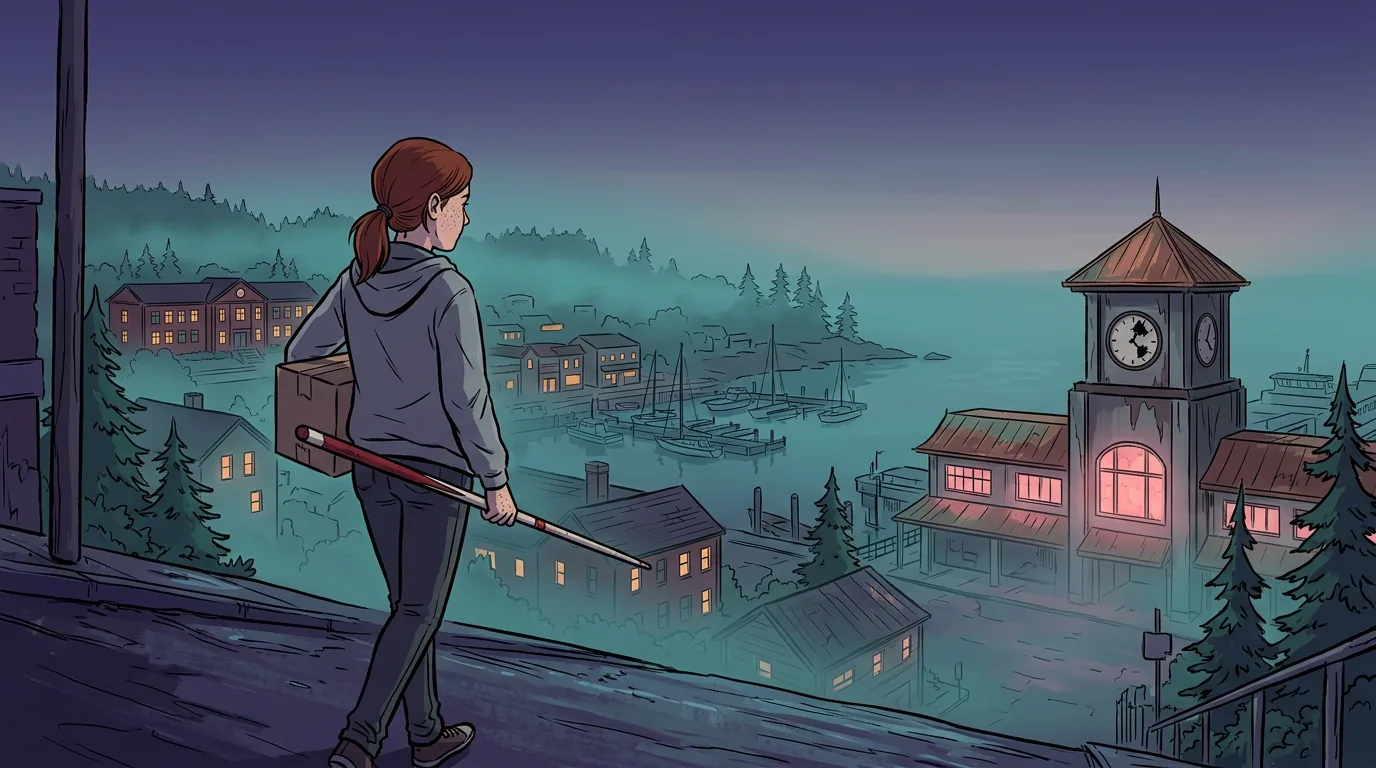
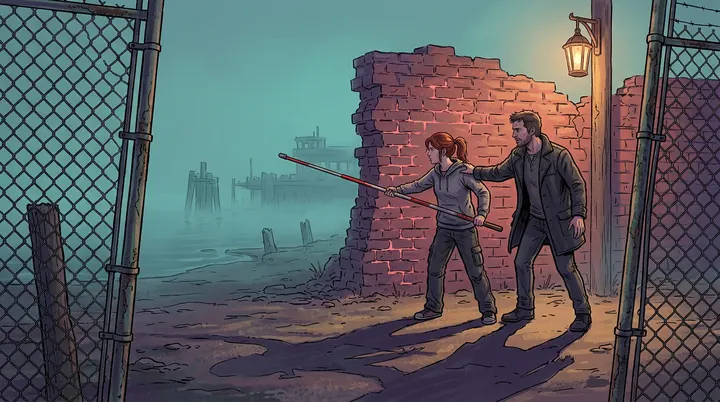
This is the reason why Dead Week is early access. I. Do not. Stop. Working.
I'll continue working on it until I can look at every piece of the game and say: "Yes, this is how the Vision wanted it". This is how the Art Goddess that possessed me, or the poet in me, or the writer in me, or the simple man in me, wanted it to be.
And in all my projects, I have always been like this: I am Possessed, and I Serve. Tools have changed nothing about how art possesses us. If anything, I am now even more possessed than before, trying to serve bigger canvases for every day I have left.
What engaged work looks like
I do not have a manifesto on this, but I have a few habits that I try to keep, and that I see in the work I admire most.
- A novel-sized work is what is expected of you, at least, to make it whole. So write the novel.
- The soul of the game grows as you dig deeper, and as you put more of your own soul and work into it. So write a second novel.
- It actually reaches an identity that you could call the Canon, or the Game, or the Spirit of it.
- Every image gets reviewed against a canon: a collection of works and creations made in the game or that I made before it.
- Music comes from human composers, licensed and credited by name. This one has been tough because of the 'vampires in the middle': it meant hours going through licences. But human musicians are the ones who need an audience. They need us more, and they don't cost us much, so let's find the ones we can feature, and shout their names louder.
- When a draft is wrong, I write down why, so the next one is wrong, but in a new way.
None of this is fast. The tools make the dull parts quicker, and the time they give back goes into the parts which are actually even more important.
There is a version of this future where artists become supervisors of an endless conveyor belt, clicking approve. I think that version is a choice too, and we can refuse it. The other version is the one where a small team finally has the means to match the size of its ambition. That is worth fighting for, and it asks more of us, not less.
In one Reddit thread, I saw people telling others not to create what they could not fund, to avoid the tools, and to avoid creating at all. No one should tell an artist to stop creating because the budget does not match the vision. Artists have never waited for permission.
Art is passion. Art owns you. Art does not obey other people's ideologies, political acceptance, and ways to say 'no no'. It never has. It has always been the way to express and to feel.
So let people express and feel, and allow artists to invent how they want to express now. Judge the canvas. Stop judging any other thing. Look at the work.
What I propose to artists is: WORK. Do the damn work. Make it happen. If you push it, you'll see you'll still need to work. Not everyone can write a novel in three weeks. Make the bigger canvas. Do it as if you could die tomorrow.
Because you could die tomorrow, and we all will some day, so we need to have made many projects, each of them bigger than ourselves.
And the truth is: we can, now.
To the artists who are angry
You have reasons. Work was taken without asking. Jobs are being cut by people, and mostly by people who never understood what the job was.
I see governments not handling the transition, and young people with skills that are no longer needed. I see too much money going into larger and larger companies. I see studios drawing lines, and commissions drawing lines.
I saw a crowd with pitchforks and torches hunting whoever disclosed their tools, while paying studios that disclose nothing.
But I also saw development, one of my oldest skills, being thrown in the bin, as if it mattered less than other crafts, because it was geeky and technical, and not defended by the same crowd. None of that is imaginary.
But anger is not fruitful.
The people who will define what this medium becomes are here. Reading.
The ones who will show up with taste and stubbornness, the willingness to face decision fatigue, to throw away a hundred free drafts to keep the one that is theirs. The people willing to face so many hours of work a day. To commit to so much 'more' creative ambition than they ever had. To take on ten roles at once.
Those people will exist. I would rather those people be artists. The big, grand former somethings, true captains of our own vision, each pointing at a new continent of gaming to discover.
Seize the canvas. Then earn it.
Dreamship Interactive · Dead Week END OF ENTRY